
Acoustic isolation
To mark the scaffolding coming down outside and the drywall going up in the main room, I’ll go into a bit more detail on the decisions made regarding acoustic isolation.
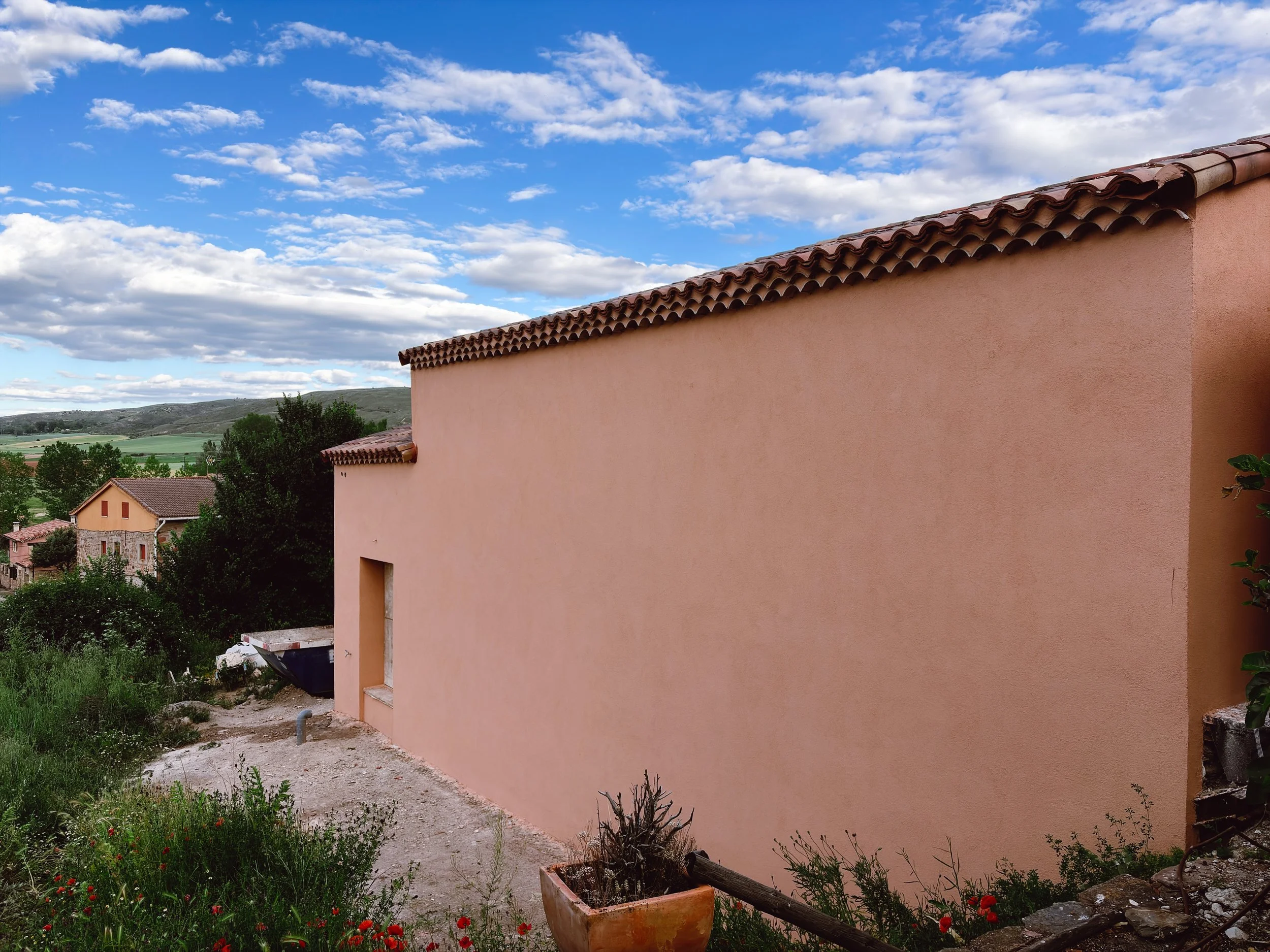
Exterior, kitchen door, and location of future garden
Alongside the focus on the recording room’s reverberant acoustic character, achieving the exceptionally quiet environment required for capturing subtle acoustic sound sources was of equal importance. This required attention on two fronts: isolating the interior from potential outside noises and minimizing any noise generated by the building’s own installations.
In many senses, the situation is quite advantageous—a single-story standalone building in tranquil surroundings, with the luxury of being designed from the ground up as a recording studio. The structure is made of 19 cm thermo-acoustic brick. The zig-zag internal geometry is designed to minimize both thermal and acoustic connections between the interior and exterior, and the interlocking grooves on the horizontal plane provide the additional benefit of greatly reducing the amount of concrete used during construction. On the outside of the structure, there is an external thermal insulation system finished with stucco. While not significant acoustically, the system does provide the watertight seal over the brickwork as well as much-needed thermal insulation. The roof assembly consists of 10 cm thick steel and mineral-wool panels, additional thermal insulation, fiber-cement roofing sheets, and the (rather beautiful) ceramic tiles.
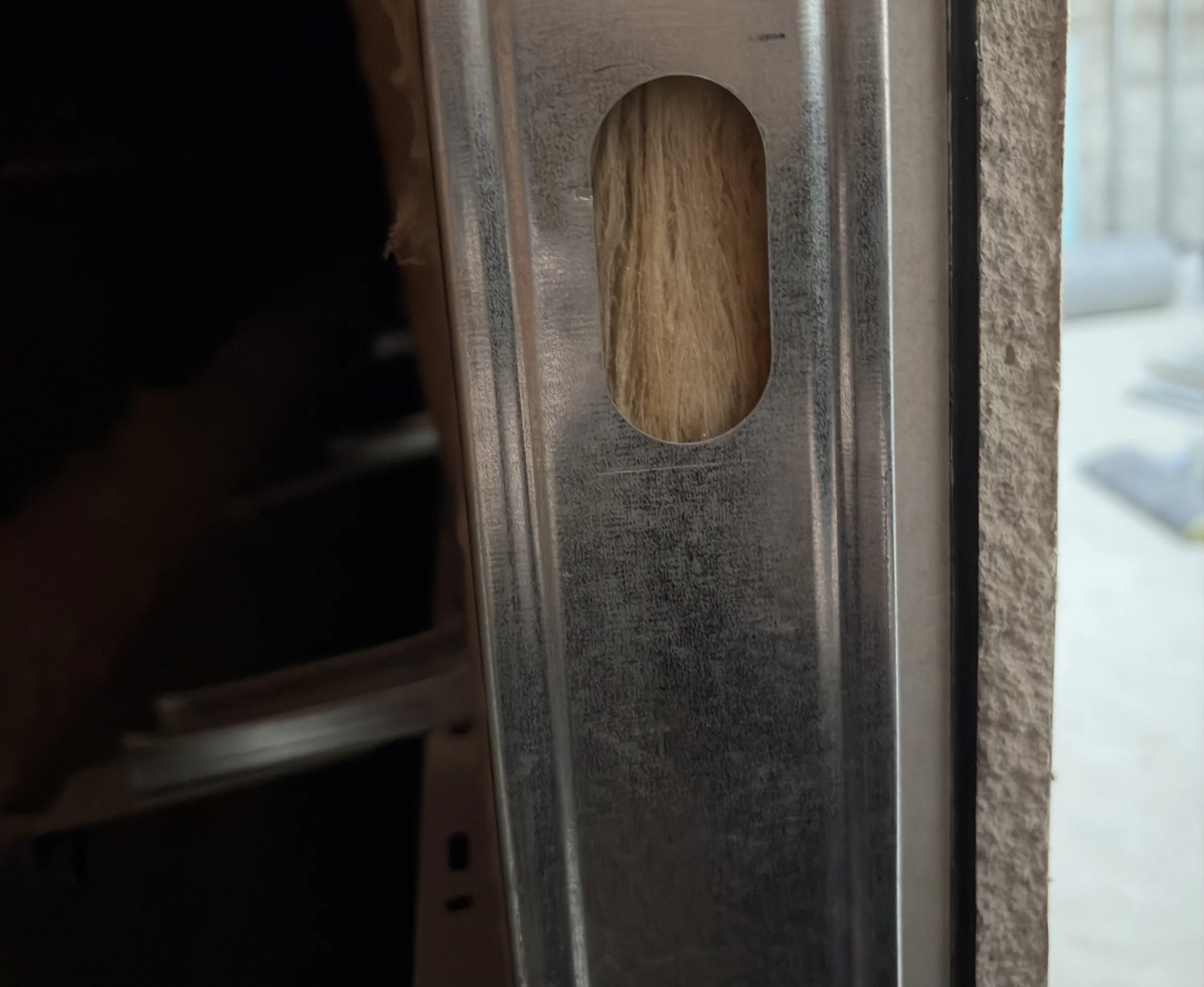
Internal structure
Inside the structure, the recording room is completely enveloped with a system comprised of 6.5 cm mineral wool panels and two layers of 15 mm drywall with a 4 mm high-density acoustic membrane sandwiched in between, which overlaps at all corners and angles. The air gap varies from approximately 10 to 40 cm as the internal structure angles inwards from the brick walls. SENOR acoustic isolation clips were used for decoupling from the walls and roof beams. The floor consists of a 10 cm concrete slab floated on top of mineral wool insulation and an acoustic dampening layer. At the entrance of the recording room, the double-leaf acoustic door is from the TC2 line by SINTEC.
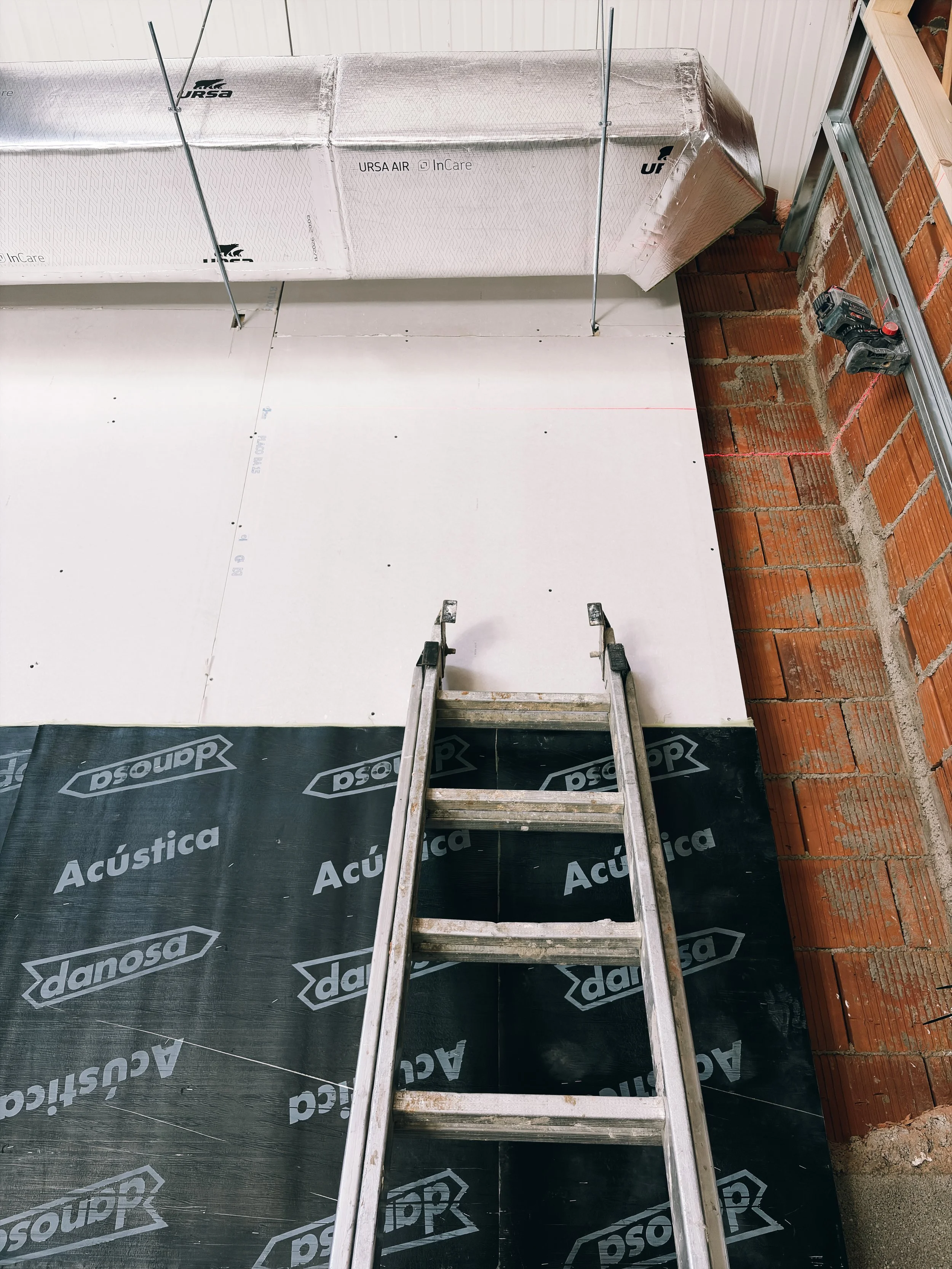
Acoustic membrane and air ducts
Looking towards the building’s own installations, custom-made fiber air ducts were selected for their resistance to transmission of mechanical vibrations and the reduction of airborne noise thanks to their mineral-wool core and internal absorbent fabric surface. The dimensions and vent locations were calculated to minimize air velocity and noise. The machines are mounted on rubber suspensions to concrete bases to avoid the transmission of vibrations into the structure. All electrical cabling is run at least two meters away from the location of any analog audio signal paths, and a dedicated isolated circuit was installed for all of the audio equipment.
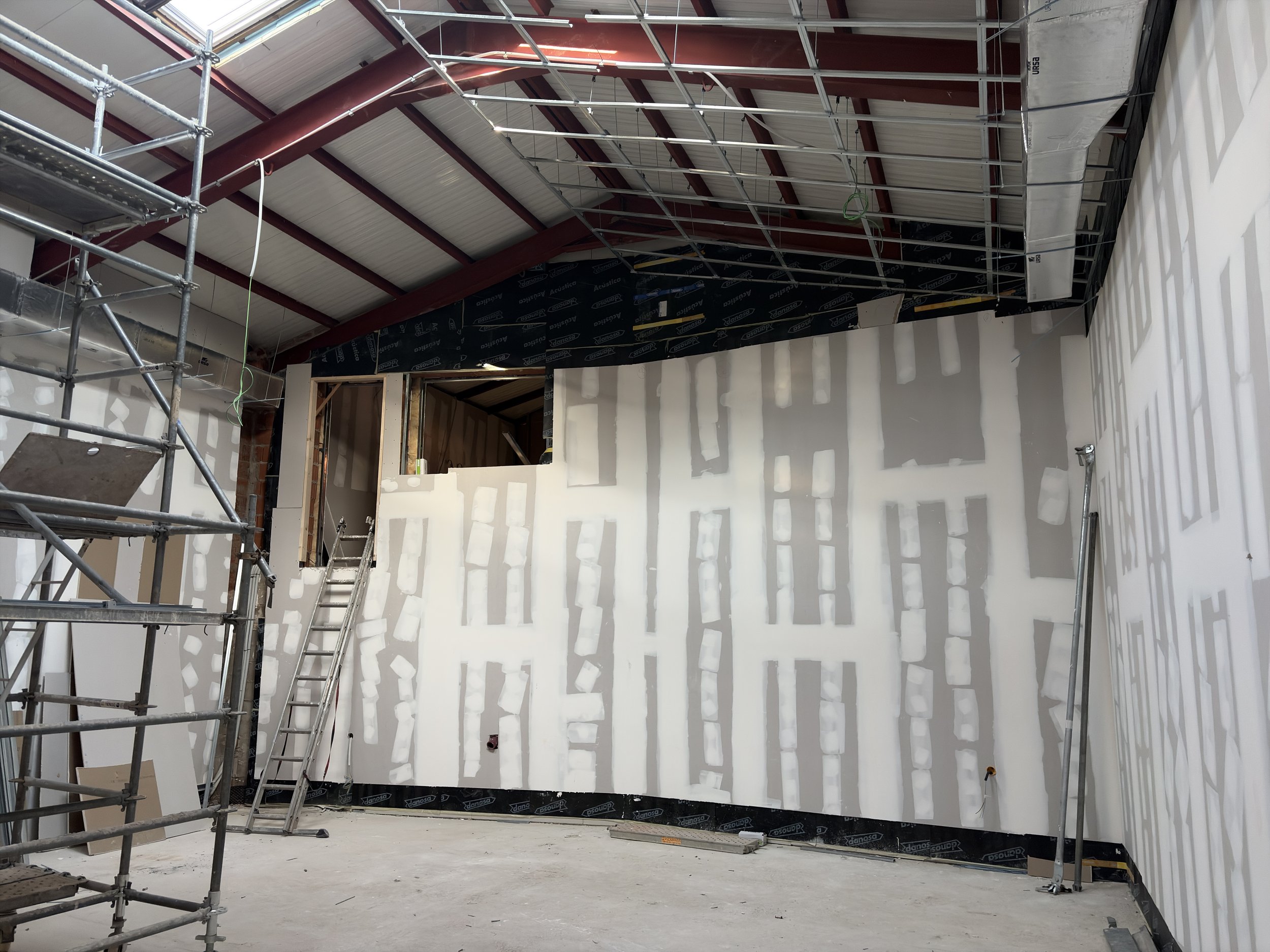
Looking towards the control room, and skylights!
Construction is expected to conclude in July, at which point acoustician María Larrosa Navarro will carry out measurements of the space and finalize the design for acoustic treatment. In her simulations during the planning phase we settled on a single line of 80 × 80 cm perforated wooden panels around the perimeter of the main recording room, which brought the response quite close to that of the Haydnsaal at Esterházy Palace— a auspicious start!