
Priorities and compromises in recording studio design
Now that construction work will be picking up pace after the winter break and a lengthy period of inclement weather, I want to start posting regularly on both the website and social media pages. Barring further delays, work will be completed in the second quarter of the year. The 300 € per day price for early reservations of dates later in the year (with no deposit required) will remain in effect at least until then. That said, my hope is that the space will be used from day one, so please reach out if you are interested in booking dates and we’ll arrange something.
In the meantime, I’ll begin by sharing some older photos from the construction process. I’ve been asked several times to explain what makes this recording studio more suitable for classical music, acoustic instruments, and voice than others. I thought that would be a good starting point to go a bit more in depth about the broader, non-technical concept and design choices behind the building.
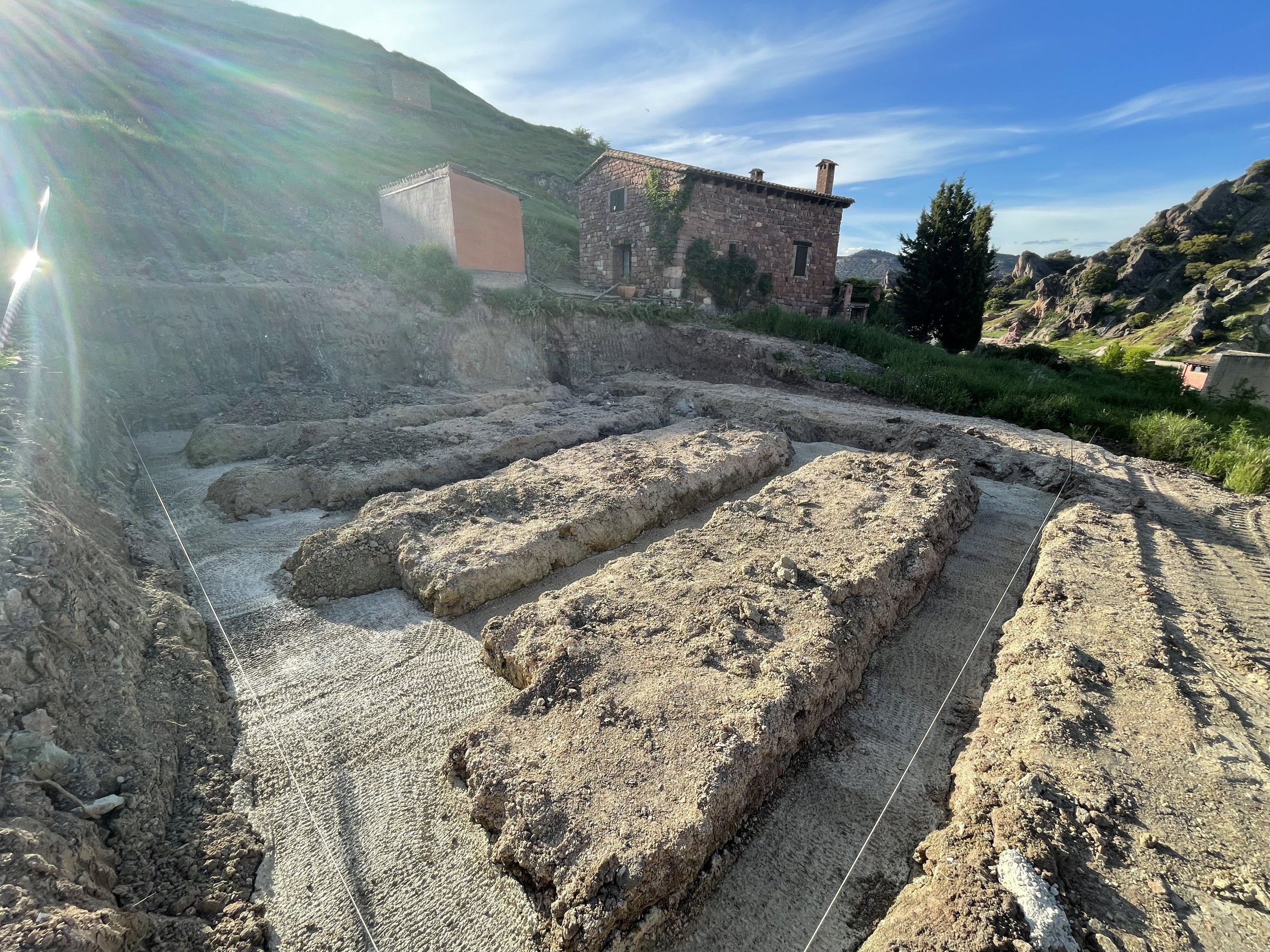
Footings
As one begins to research the design and acoustics of music-making and recording spaces, it becomes clear that the process is largely a matter of setting priorities and making compromises. In this case, the priority was to create as large a recording room as possible, in order to accommodate ensembles and chamber orchestras as well as to allow for a naturally reverberant ambience that is so fundamental to delicate acoustic and classical recordings. Rooms like this one are partners in music-making, not only producing a flattering and incalculably complex spatial canvas for a performance, but actively informing interpretive decisions. Of course, these characteristics can come at the expense of musical versatility, ease of editing, and flexibility of aesthetic decisions in production, and this will likely not be an ideal space for all musical genres or performers. For many, however, its character will prove inspirational.
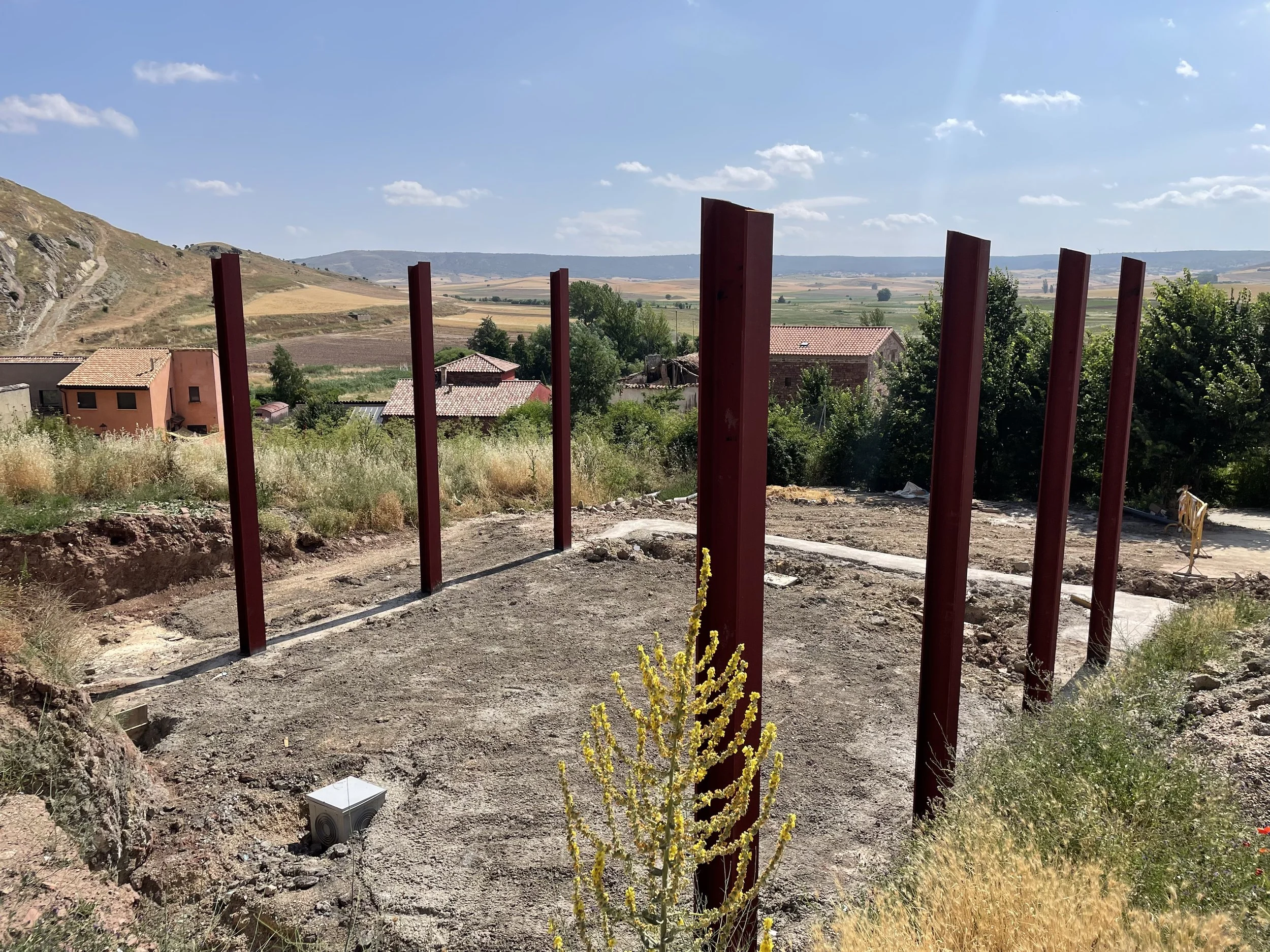
Steel supports for recording room
For a studio designed around capturing subtle acoustic sound sources, isolation from external noise was another major concern. All classical musicians are familiar with the frustration during recording dates caused by unforeseen construction, landscaping, military exercises or chatty wildlife (I’ve encountered them all…) amidst the most seemingly serene of surroundings, and a lack of certainty regarding the scheduling of recording sessions can have costly consequences. Even though the village of Riba de Santiuste is surely amongst the most remote and tranquil sites imaginable, care was taken—in collaboration with manufacturers of isolation products and installation specialists—to formulate an effective solution that doesn’t consume a truly excessive amount of physical space or budget. Interestingly, as the region experiences quite extreme temperatures in the winter and summer seasons, the local design and construction teams were accustomed to demanding thermal isolation requirements. Of course, thermal performance is not necessarily equal to acoustic, but the familiarity with principles was helpful. I’ll go into more of the technical details of the isolation design when installation begins.
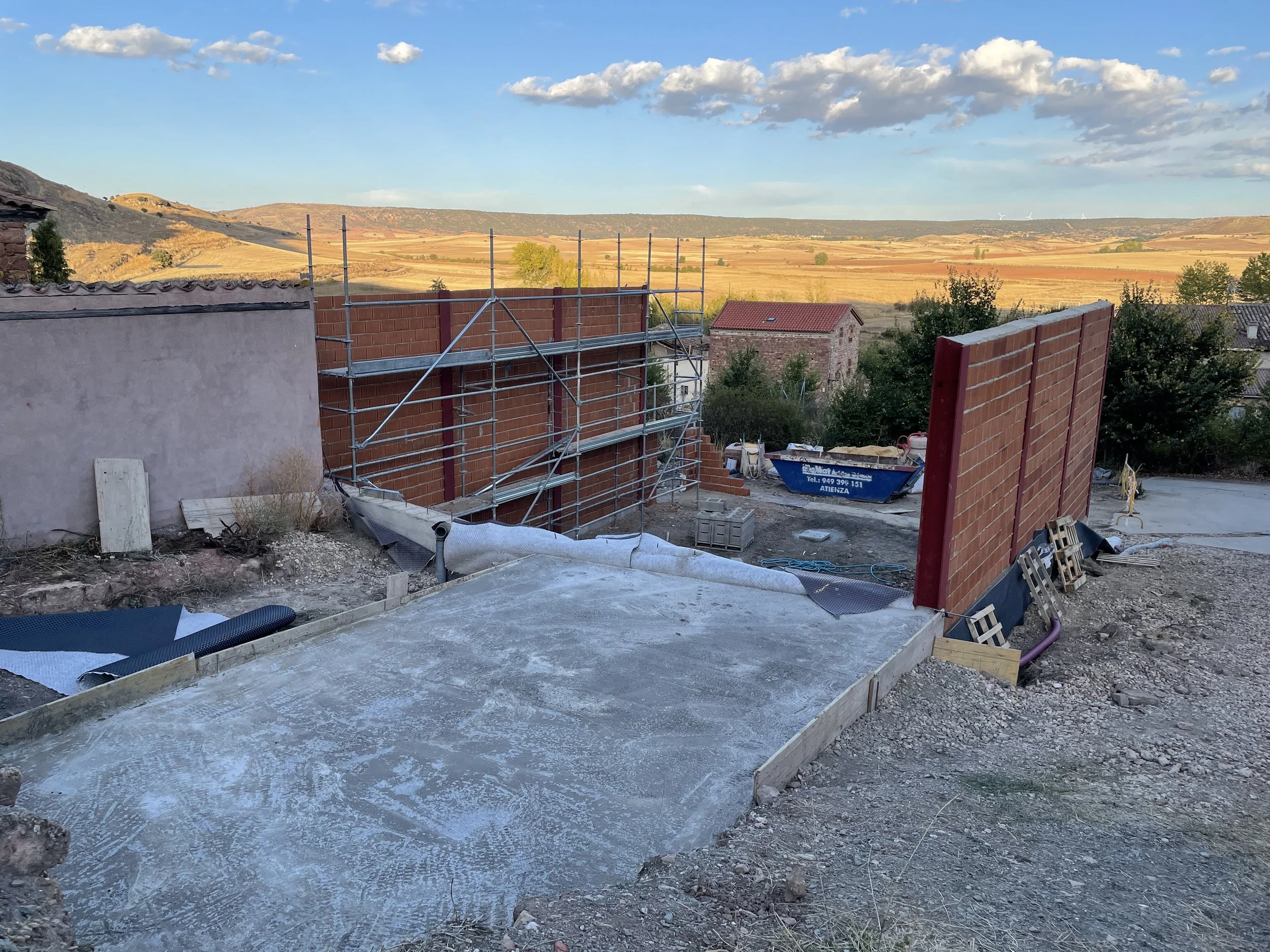
Lateral brick walls and control room foundation
When looking at the floor plan of the studio, the unusual symmetrical angles are no doubt immediately apparent. Their purpose is to reduce echoes and resonances that can occur between parallel surfaces. In the case of the control room, the role of the angled side walls is to direct first reflections from the monitors away from the listening position towards the rear wall, which will be covered with roughly half a meter of absorption. Other important but somewhat niche considerations include an isolated electrical circuit for all audio equipment, specialized components in the heating/cooling system to minimize noise, and an entrance from the parking area to the main room through a pair of double acoustic doors that allows for the comfortable delivery of pianos and large percussion instruments.
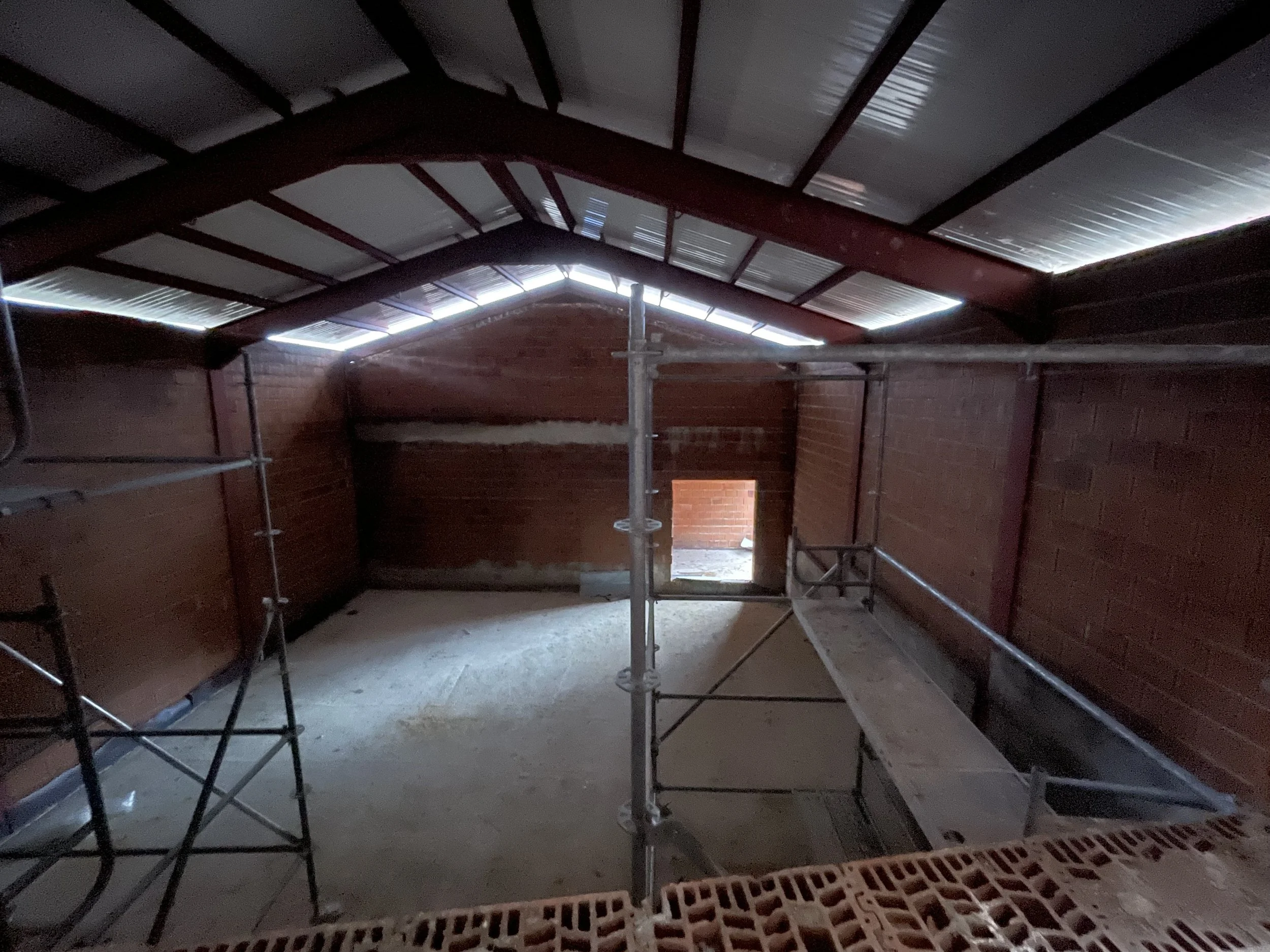
View of the studio shell from the control room. The wider segments in the center portion are where skylights will be installed.
Fingers crossed for better weather.